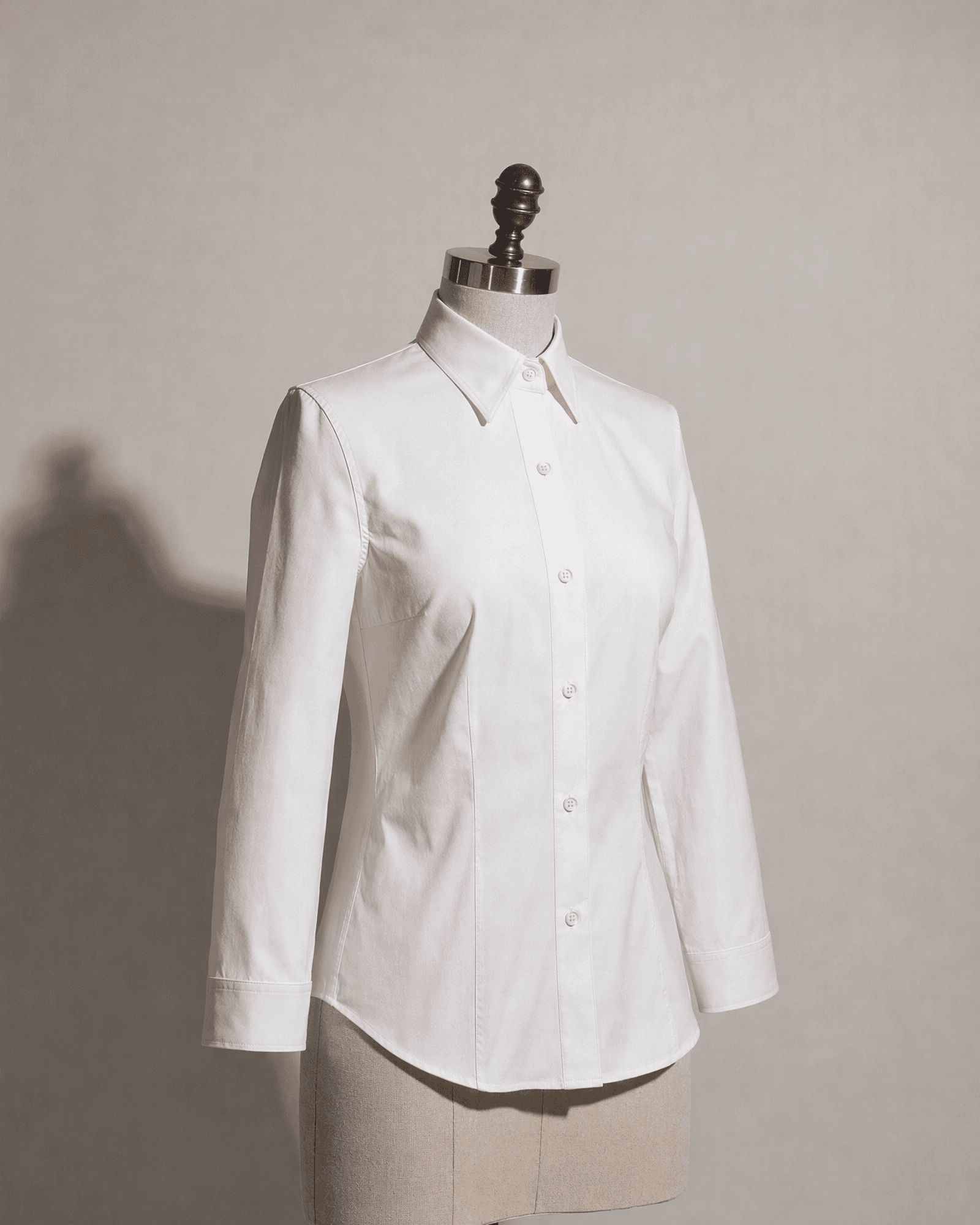
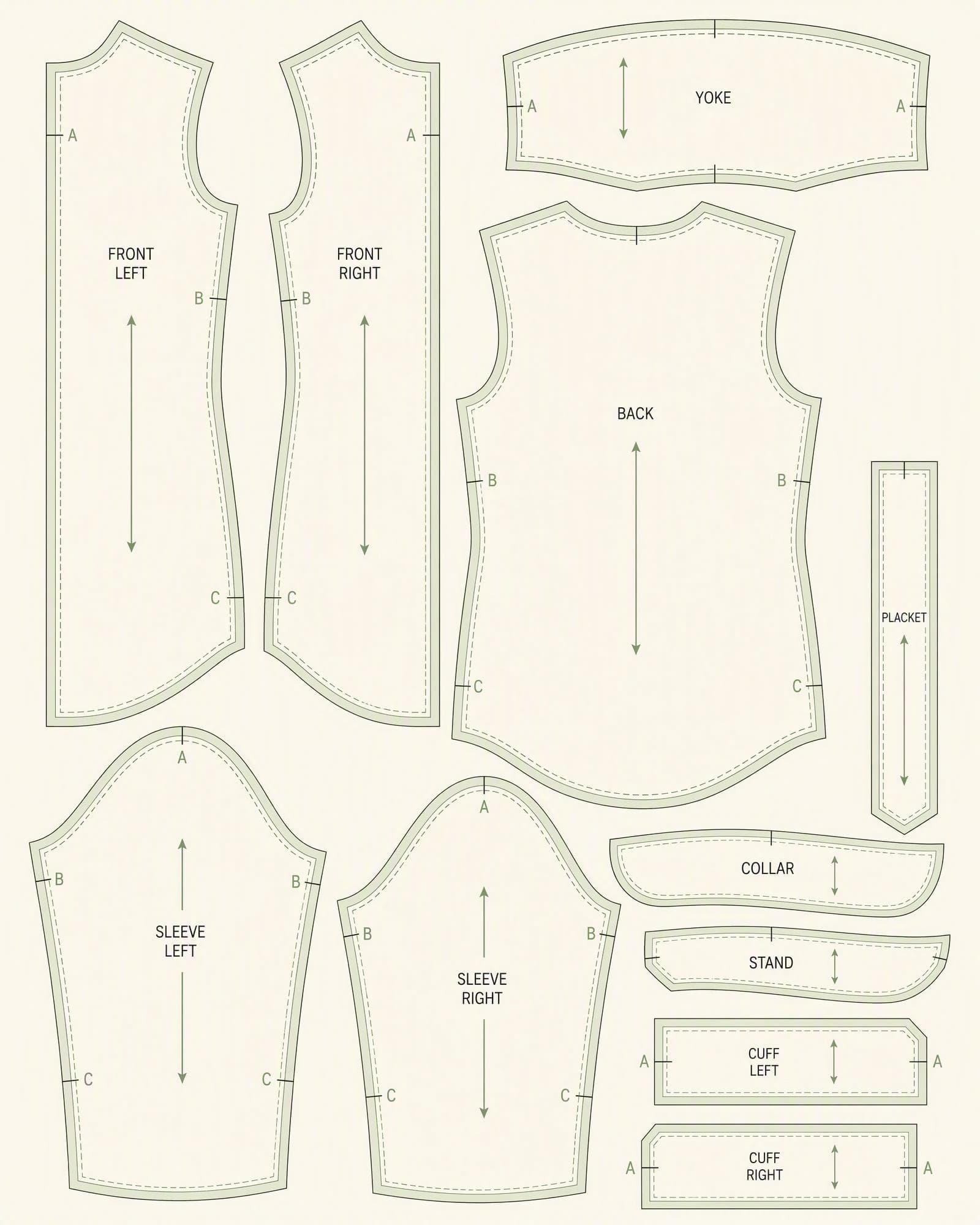
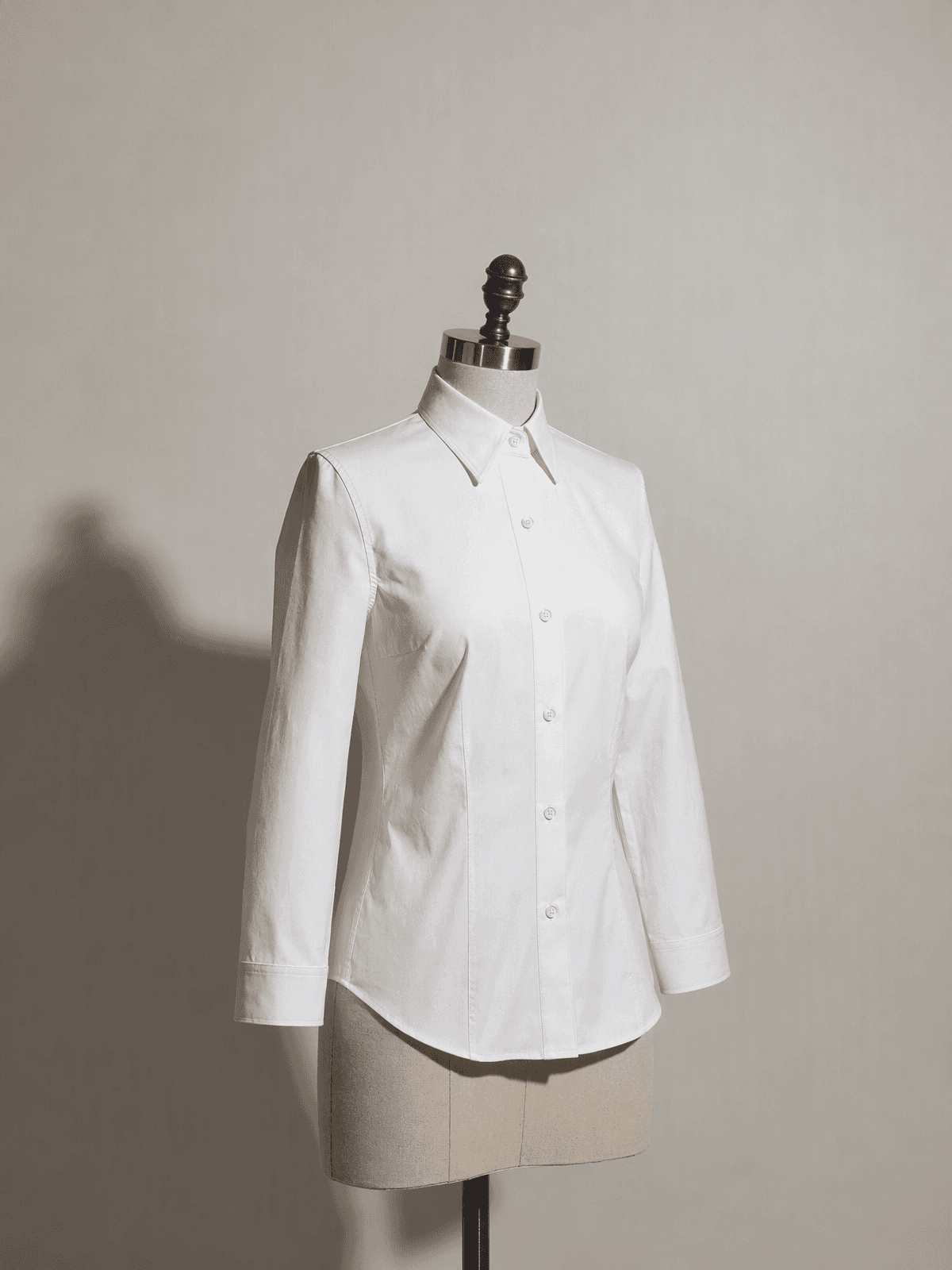
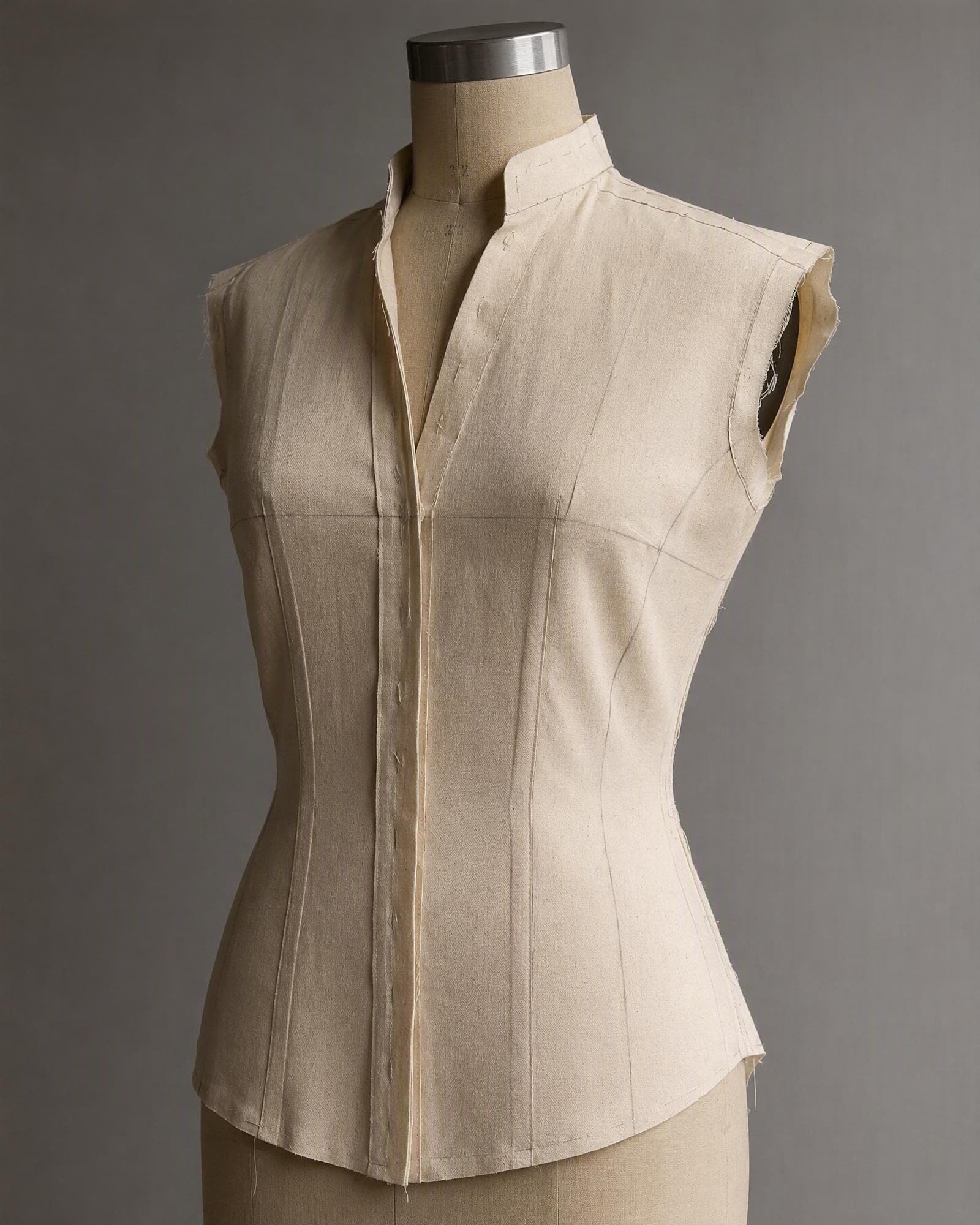
Fitted shirt · cotton poplin
- Pieces
- 11
- Size run
- XS–3XL
- Drafted
- 14 min
- Verified
- 7
Pattern engineering / 01
Draft from measurements, grade the whole run, and export a file the factory can actually open. Every size is checked before it leaves your screen — so you're not exporting each one to measure it again.
See a sewn sampleFree forever for opening, converting and checking pattern files·No card·Runs in the browser
Fall / Winter
2026
What we heard
“Usually it is the grading, it is pain.”
— Freelance 3D pattern maker
“Sometimes you need to scale in 30%, sometimes 50%, sometimes 100%.”
— Freelance pattern maker, on moving a file between two CAD systems
“I need to go back and export each of it alone, and then double check the dimensions — which not always is accurate when you do it automatically.”
— Freelance 3D pattern maker
“The problem is not between sharing the files, import and export. The problem is their knowledge.”
— Freelance pattern maker, on factories
Software has promised to draft your patterns for twenty years. Professionals still check every size by hand, because the geometry was never guaranteed.
From recorded discovery interviews, 2026.
Inside the studio
Built for the whole run
Grading here is not a table of per-point offsets. Swap the size chart and the whole pattern re-solves against it — so the shape holds at 3XL the same way it holds at M, and non-linear size progressions are the same operation as a standard run, not a separate feature.
Then it checks itself. Seam lengths walked, notches matched, darts closed, every measurement compared against your tolerance. You get a report, not a hope.
Verification · size M
| Measurement | Target | Measured | Dev. |
|---|---|---|---|
| Chest, half | 50.00 | 50.00 | 0.00Within tolerance |
| Shoulder | 43.40 | 43.40 | 0.00Within tolerance |
| Nape to hem | 68.00 | 68.00 | 0.00Within tolerance |
| Neck width | 19.00 | 19.00 | 0.00Within tolerance |
| Armhole walked | 23.99 | 23.99 | 0.00Within tolerance |
| Sleeve cap, front | 25.49 | 25.51 | +0.02Within tolerance |
All 6 measurements within ±0.5 cm. Whole run checked.
Set the tolerance before you grade.
“She basically paid me for nothing because she couldn't use it after all.”
A pattern maker we interviewed graded a full run to a 1 cm tolerance the client had stated. The real tolerance was 0.5 cm. The work was finished, correct, and unusable.
Declare the tolerance at the top of the file. Every size is measured against it, and anything outside it is flagged before you export.
The hand-off
Right now you export AAMA, then ASTM, then a single size as a fallback, then an Excel report, then a screenshot — because you can't be sure what the factory can open. Then someone there scales it wrong anyway.
Send one link instead. It opens in any browser, on any machine, with no account and no software. Pieces, measurements, notches, grainlines, the size run, the marker. They can print it at real size or download whatever format their machine actually wants.
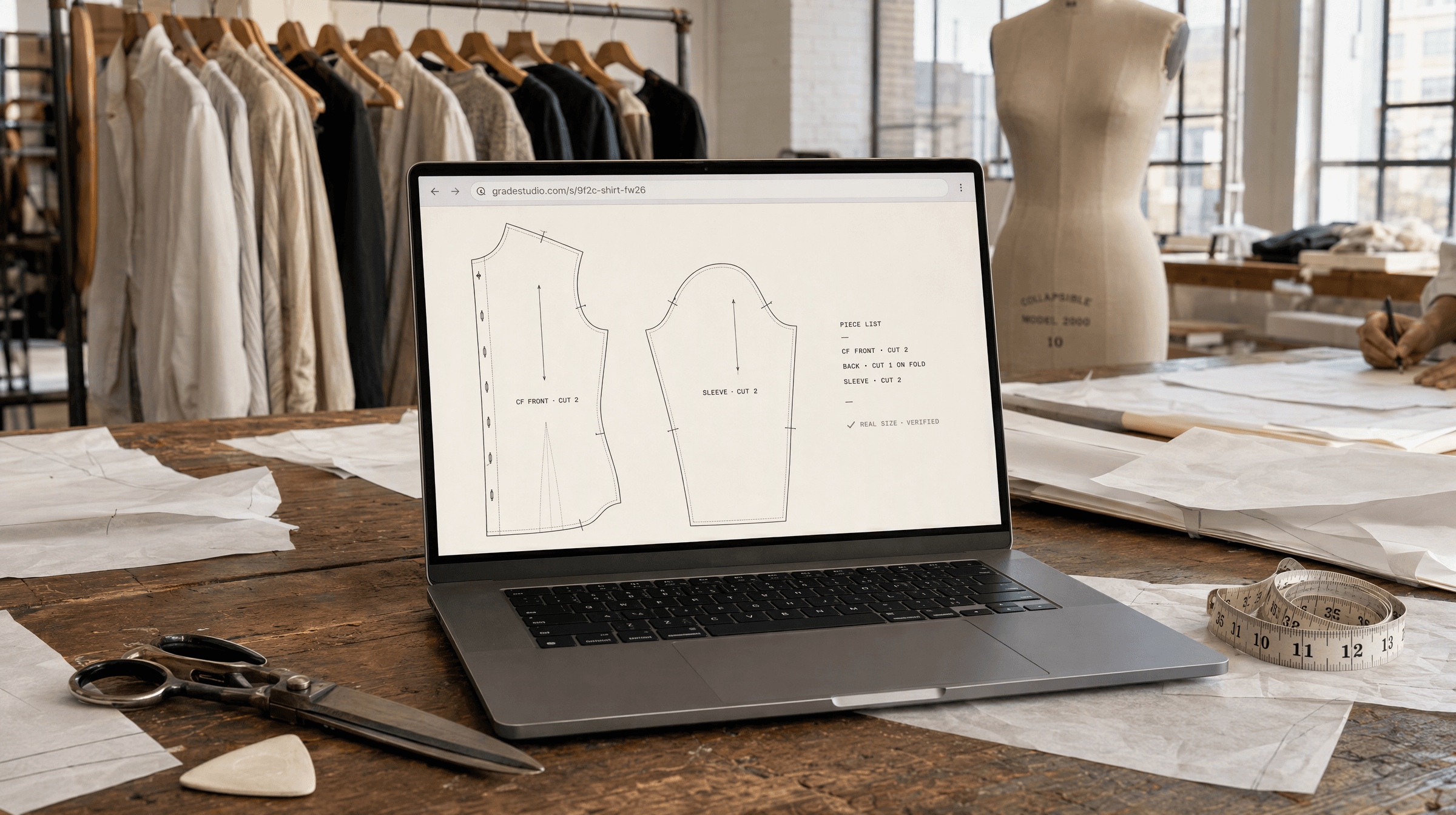
The factory opens a link. Nothing to install.
Pieces, the size run, and a print that is actually real size.
The receipts
Same file, same export you'd get. No renders, no avatars.
Fitted shirt · cotton poplin


A-line skirt · wool suiting


Raglan sweatshirt · loopback jersey


Tailored trouser · wool twill


Shift dress · viscose crepe


Blazer · wool flannel
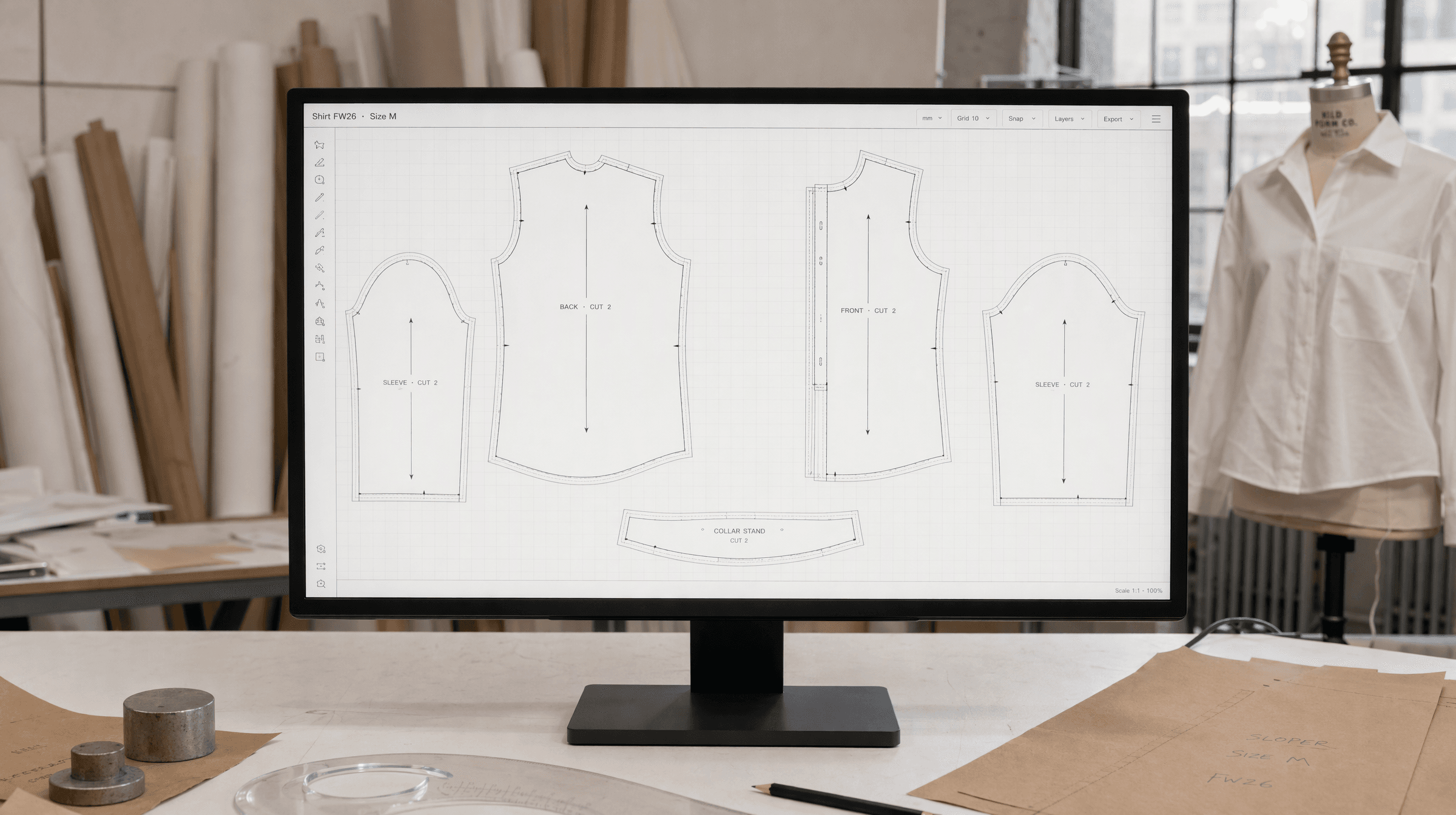
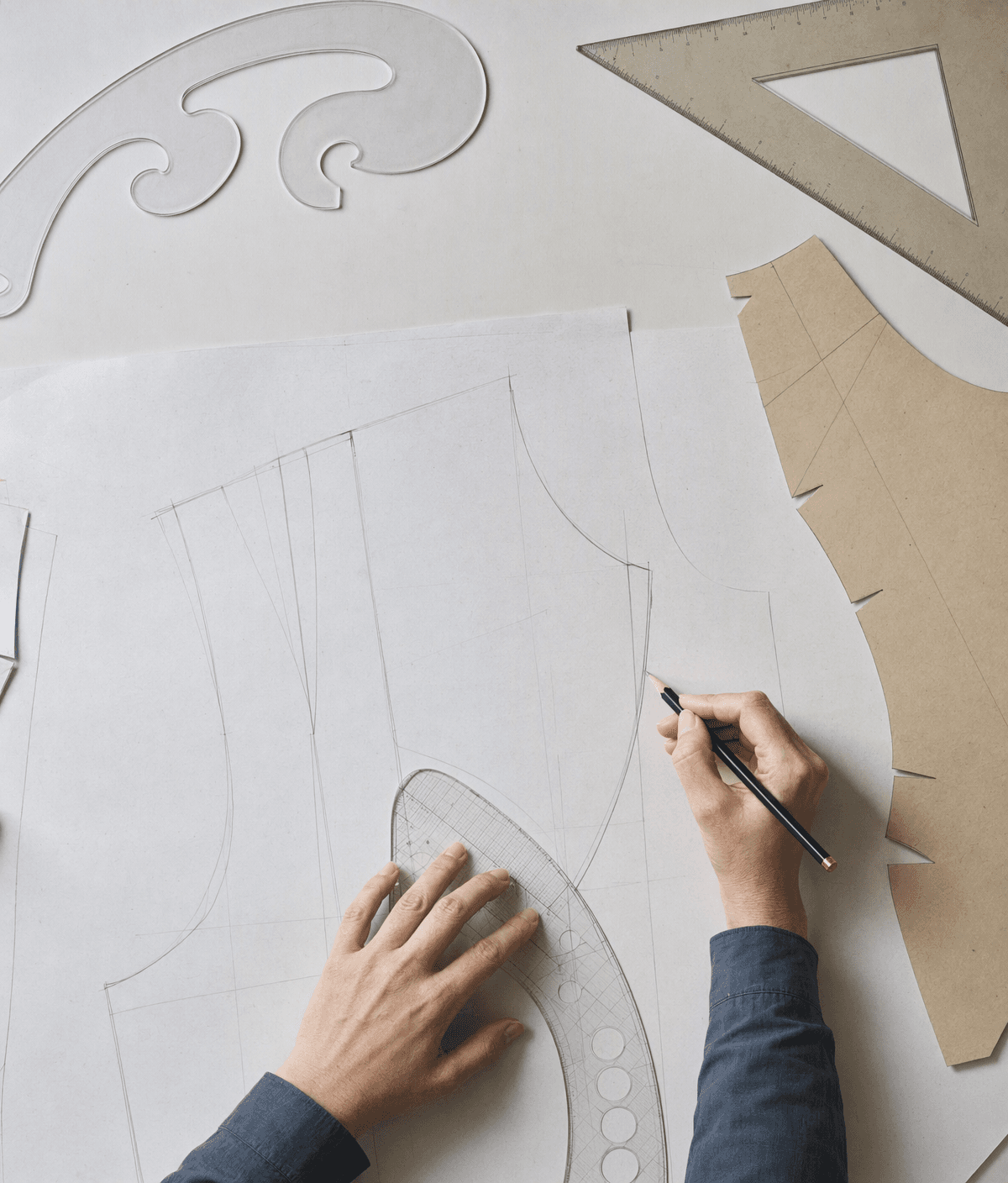
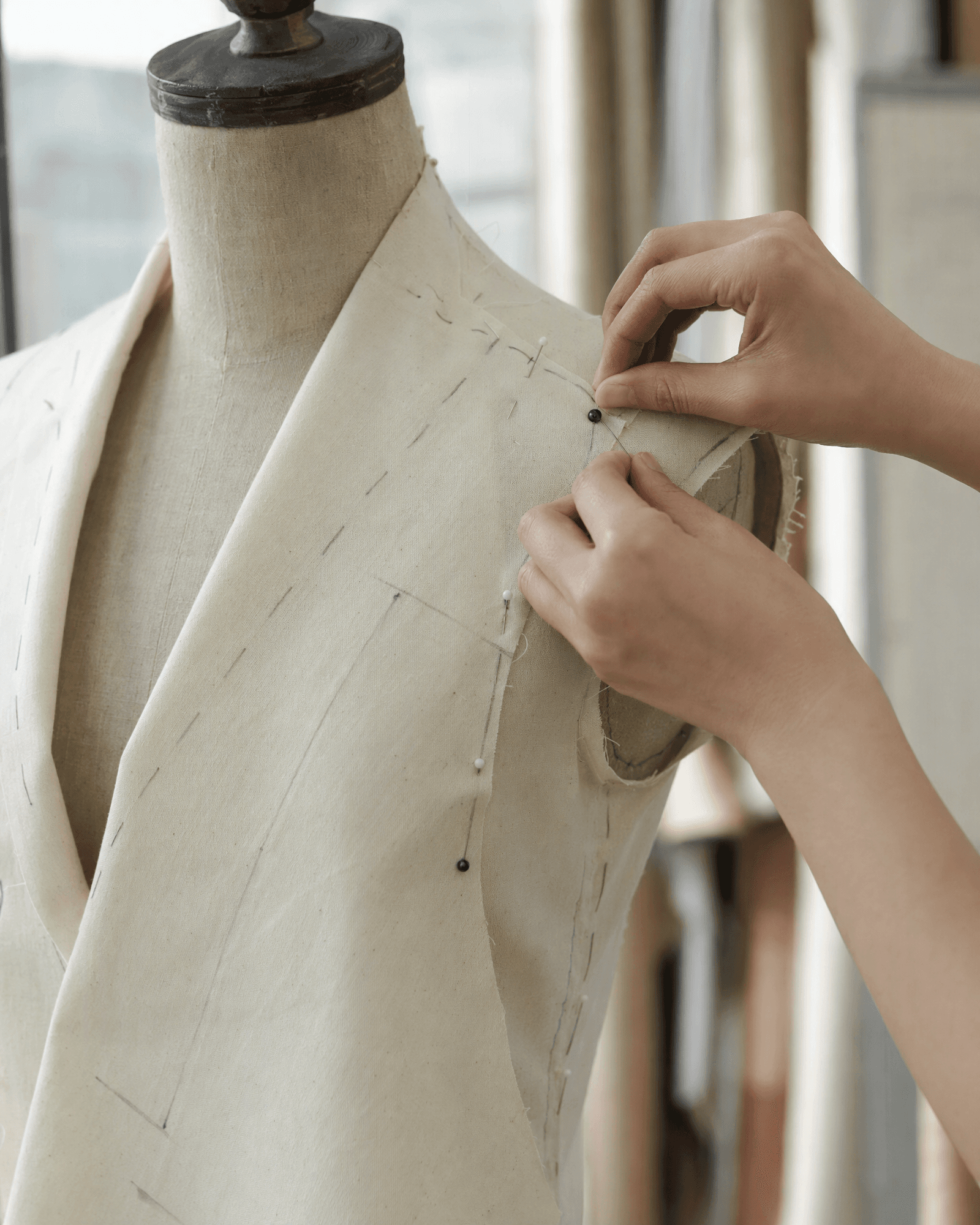
The drawing surface, as the file sees it.
Seam allowance, grainlines and notches live in the geometry.
A clear system
Most pattern software stores a list of points. Gradestudio stores the construction: this seam matches that one, this dart closes here, this curve is the sleeve cap minus ease. The shapes come out of solving those rules.
Seams can't mismatch, because the correspondence lives in the file. Grading re-solves the whole pattern, so it holds at the extremes. Anything suggested to you goes through the same solver, so it's valid before you ever see it.
This is also why it's quick. You're not checking the pattern after you build it, because it was never able to be wrong.
Under the hood
Every system in this category now claims AI. Here is exactly what ours does, where it sits, and what it will not do.
Most tools that generate patterns output geometry — a list of points and curves. Geometry can be wrong quietly, and you find out when the sample comes back.
Gradestudio's assistance outputs construction: this seam corresponds to that one, this dart closes here, this curve is the sleeve cap minus ease. It goes through the same solver and the same verification report as a pattern you drew by hand. A proposal that would leave a seam mismatched isn't caught late — it can't be written down.
Nothing reaches you unsolved.
01A request
In your words, or a measurement set dropped in.
“Grade this to the client's chart, 34-46, 0.5 cm tolerance”
02A constraint program
Not shapes. The rules that produce them. Readable, editable, and yours to correct.
03A solved, checked pattern
The same report § 4 shows you. The assisted path and the hand-drawn path end in the same check — that is the whole point.
Verification · size M
Tolerance ±0.5 cm
| Measurement | Target | Measured | Dev. |
|---|---|---|---|
| Chest, half | 50.00 | 50.00 | 0.00Within tolerance |
| Shoulder | 43.40 | 43.40 | 0.00Within tolerance |
| Nape to hem | 68.00 | 68.00 | 0.00Within tolerance |
| Neck width | 19.00 | 19.00 | 0.00Within tolerance |
| Armhole walked | 23.99 | 23.99 | 0.00Within tolerance |
| Sleeve cap, front | 25.49 | 25.51 | +0.02Within tolerance |
All 6 measurements within ±0.5 cm. Whole run checked.
How it gets better
When the solver walks a seam, matches a notch or measures a size against your tolerance, it produces something unusual: a definite answer about whether a pattern was right or wrong.
That answer is the part nobody else has. A tool that stores a list of points has no way to know a grade was wrong — which is why one of them will quietly make two lengths agree rather than tell you they don't. It cannot learn from a mistake it cannot see.
So the checks are the lesson. Every run that passes, every tolerance that flags, every fix a pattern maker accepts or overrules — all of it sharpens what the assistance proposes next, on the kind of garment you actually make.
We are at the beginning of this. Here is exactly where:
A cycle in four nodes: you draw or it proposes, the solver checks, a definite answer comes back, and the next proposal is better. The cycle is drawn once and stops.
And the part that has to be said in the same breath: your patterns are not in it.
Your patterns are yours. We learn from the checks, never from the work. The record of a rule being broken carries no geometry, no measurements and nothing that identifies you or your client — and it is the only thing that leaves your account. Export everything, any time, in open formats.
Read exactly what we storeAutomatic pattern grading that re-solves the pattern against a new measurement chart instead of shifting points. Holds at the extremes, where rule tables break.
Walks every seam, matches every notch, closes every dart, measures every size against your declared tolerance. You get a report.
Trues seams, completes curves, snaps to valid geometry while you draw. Same solver, so a suggestion is always a legal one.
Your chart in, a solved block out, ready to work on.
A photograph of a paper pattern, or a DXF from another system, becomes a live constraint model you can grade and edit.
Every fix a pattern maker accepts or overrules teaches it which proposals are worth making — on real garments, not a synthetic dataset.
If something can't be resolved, it stops and asks you. It never quietly makes two lengths agree.
Construction is guaranteed — seams match, the size run holds, it's correct before you cut. Fit depends on ease, fabric and whose body it's for. No software can promise that one, and anyone who does is selling you something.
It removes the re-measuring, the re-exporting and the second guess. The judgement stays yours.
Your work isn't training data for a shared model. Ever.
It learns that a rule was broken. It never sees the pattern that broke it, and never will.
Later
Sketch to pattern, and photograph to pattern, are coming — but not first. Making patterns from a prompt is only worth having once it lands on a substrate that verifies everything it produces, and that substrate is what we're building now. Ship it the other way round and you get a plausible pattern that doesn't sew, which is a thing this industry has already been sold twice.
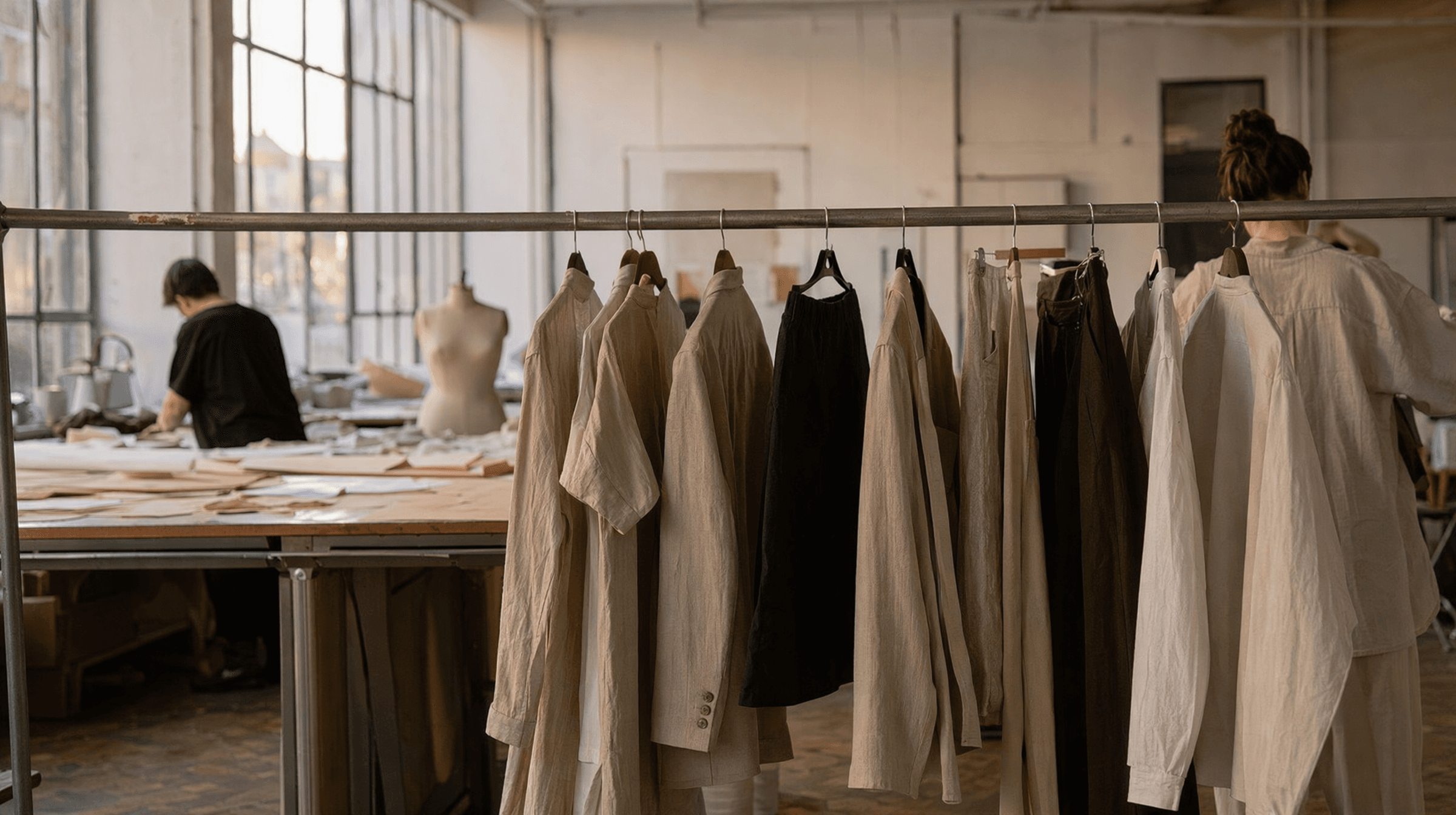
A working week, in a room where the patterns get used.
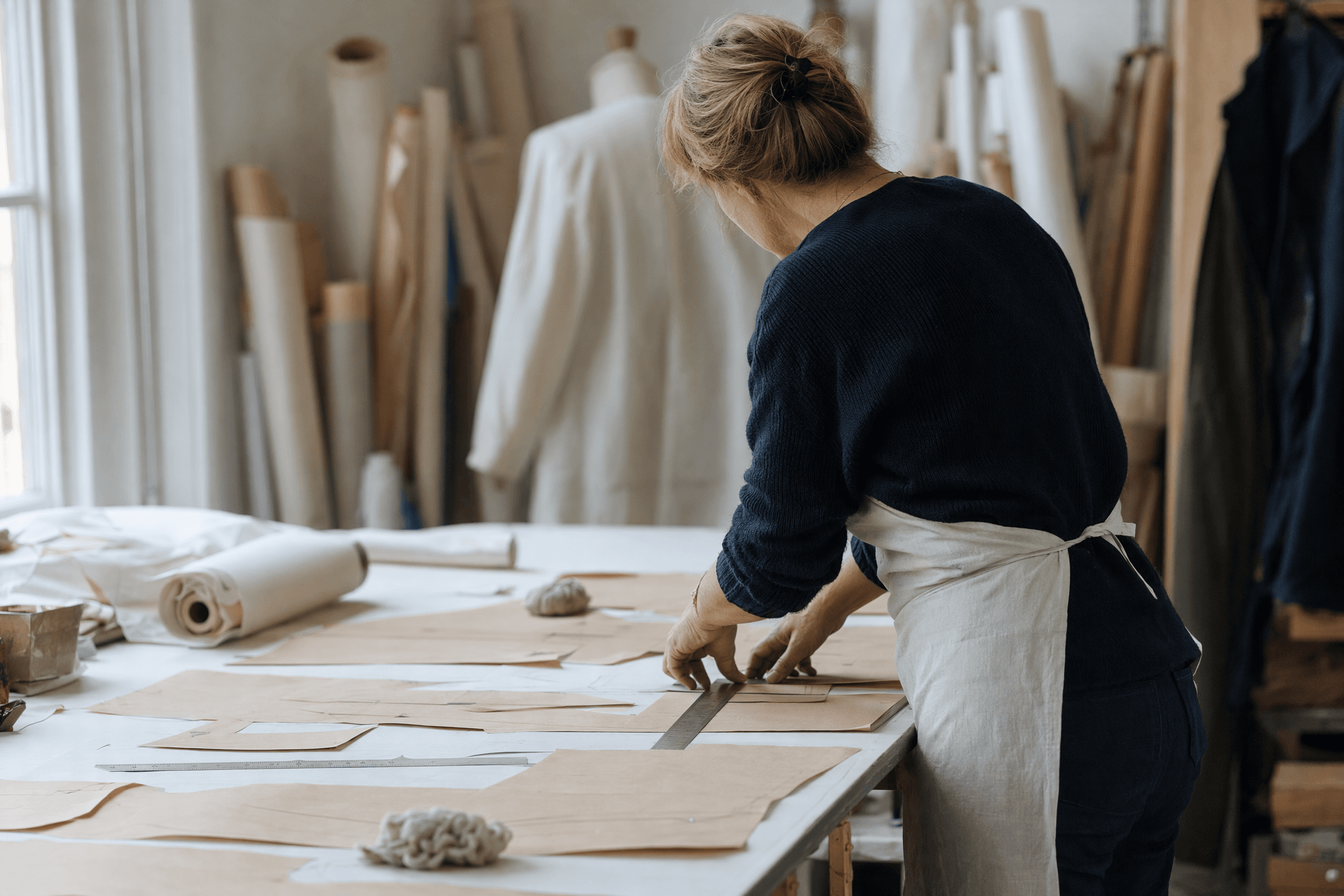
Every style on that rail started as a flat pattern and a size chart.
The arithmetic
A pattern maker we interviewed walked us through a plain t-shirt, from nothing, in her own tools:
Today 3.4 h
With Gradestudio 1.4 h
Roughly three to four hours, and only the first of them is pattern making. The rest is verification and hand-off — re-measuring sizes the software already claimed were right, and exporting the same style five ways because you can't be sure which one they'll manage to open.
That's the part we take.
You still fit the garment. You still make the design calls. You stop paying for the work that only exists to check the work.
Times reported by a working freelance pattern maker, August 2026. Your mileage will differ by garment and by tooling.
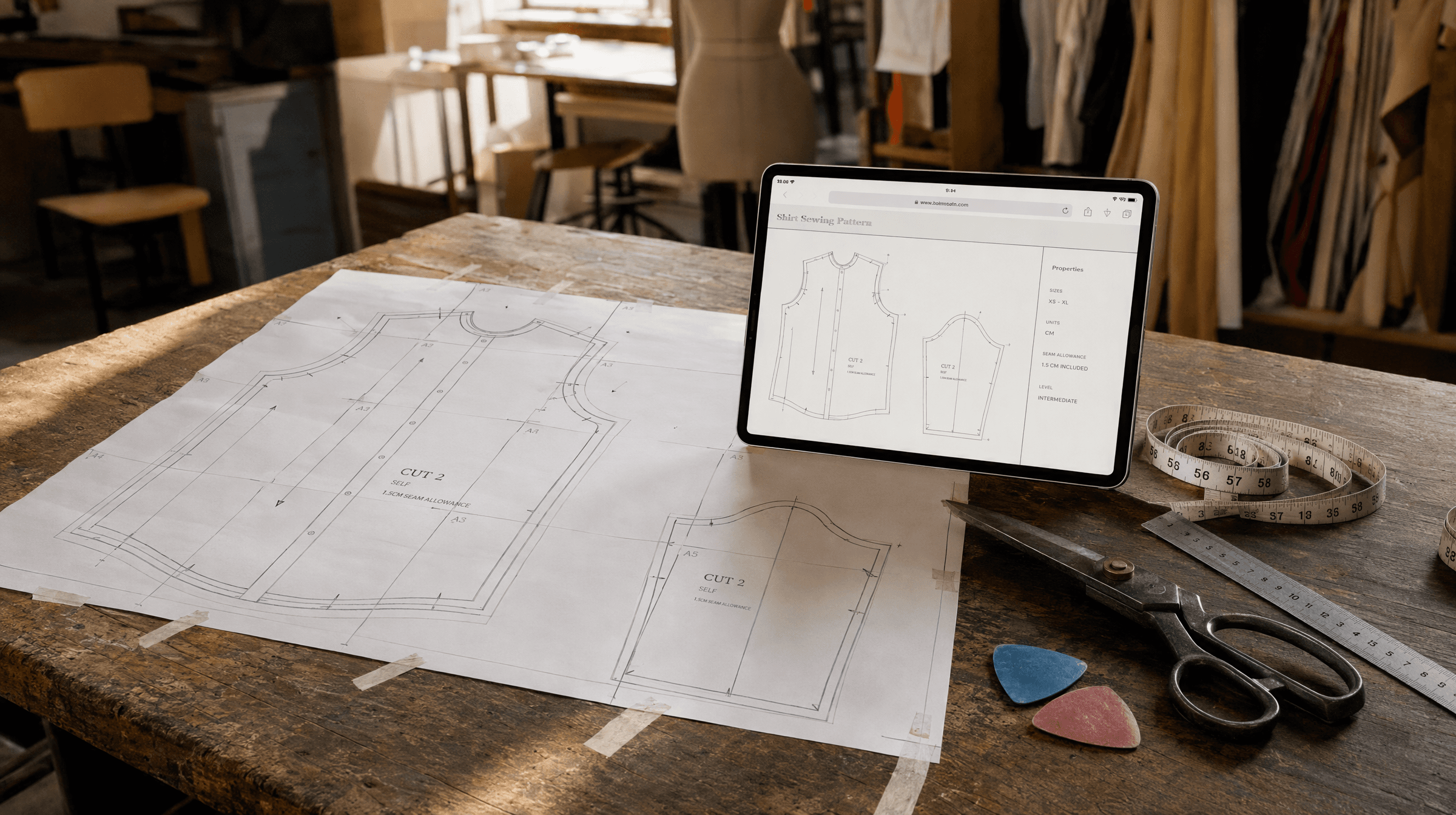
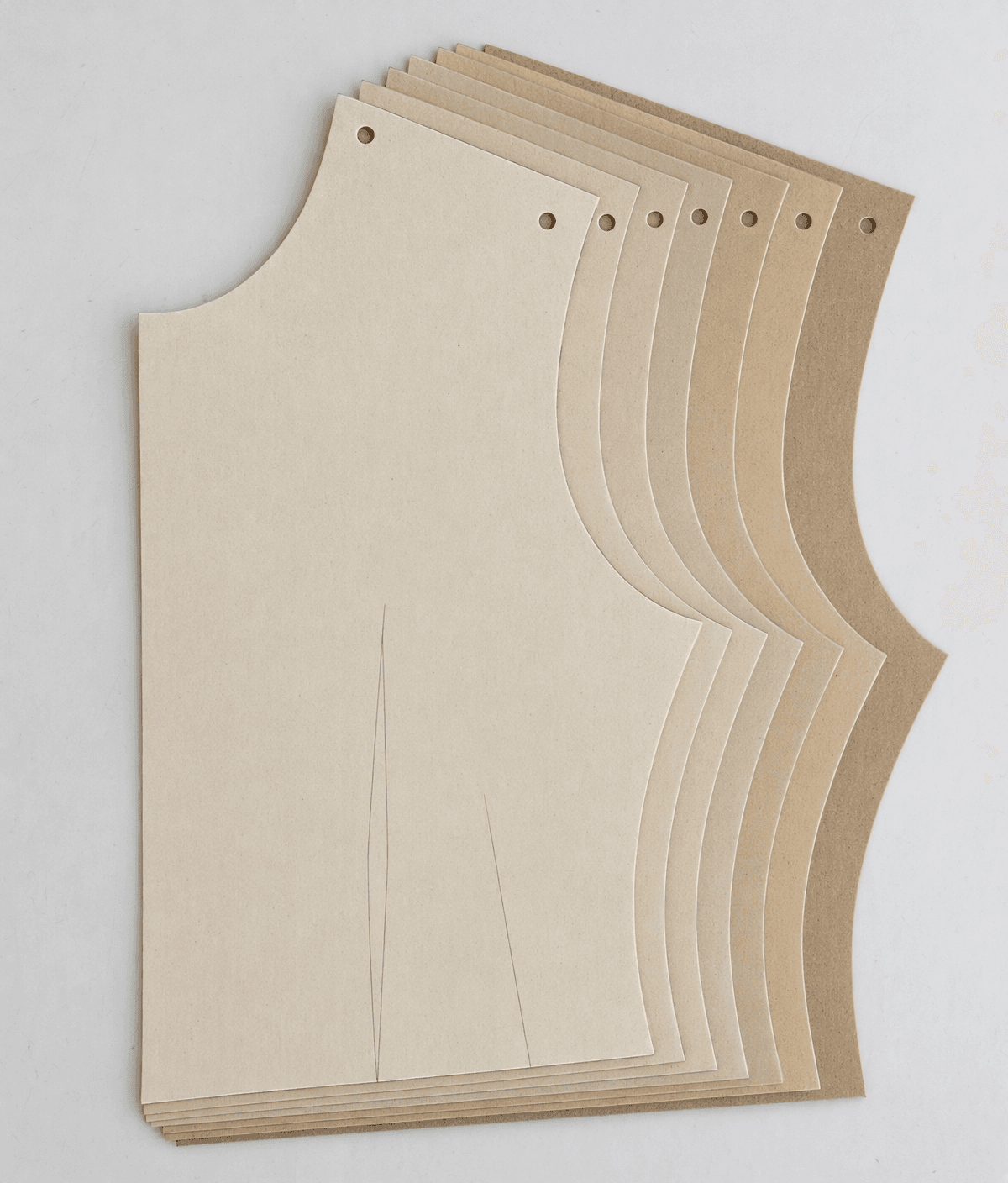
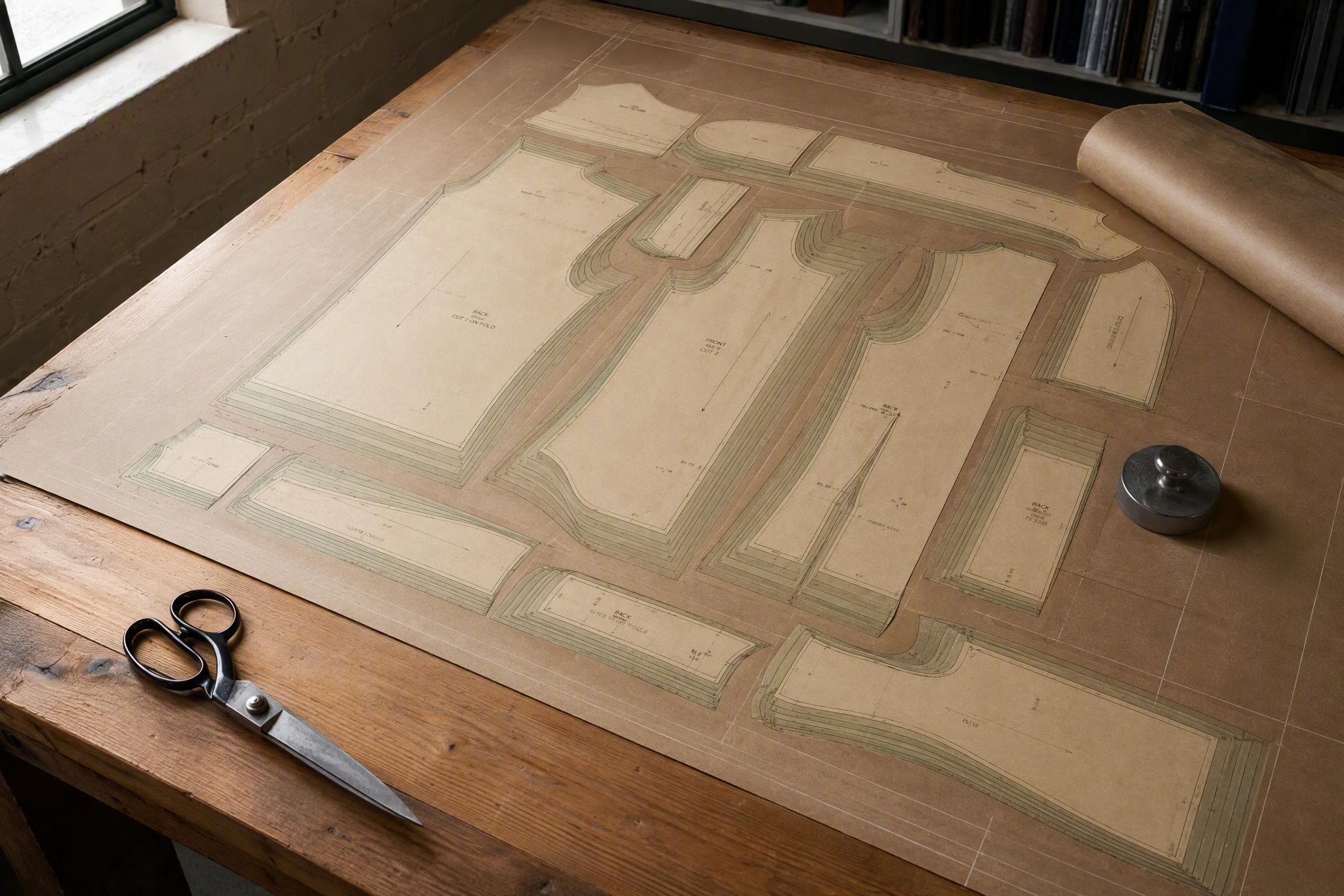
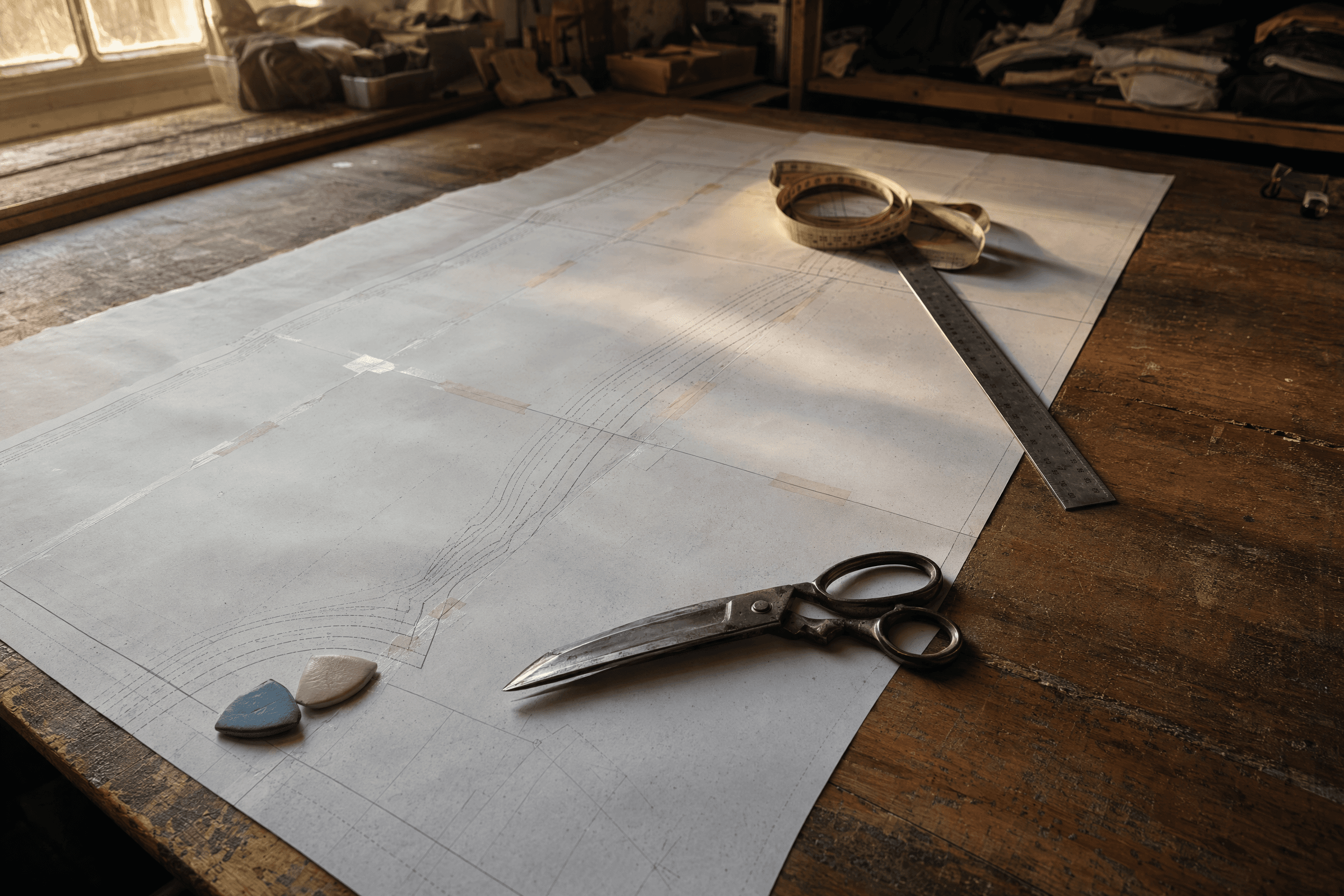
The same file, on paper, at real size.
Tiled to A4 or sent to A0. What they print is what you sent.
Four ways in
01
Draft, grade and hand off without re-measuring every size.
02
Own your patterns, open them yourself, send the factory something they can use.
03
Take a style from block to cut marker without leaving the browser.
04
Learn on the tool the industry is moving to. Free, and it runs on the laptop you already have.
Free forever
Drop in a DXF, a Gerber file, a PDF or a photograph of a paper pattern. We'll open it, tell you what's wrong with it — mismatched seams, broken grade rules, missing notches, wrong scale — and let you print it at real size. No account. Free for good.
01
Open a pattern file without owning the software that made it.
02
Find out whether a file is at 100%, 50% or 30% — before you draft on top of it.
03
Export a PDF the print shop can actually print at size. A0 or tiled to A4, with a measured test square.
04
Walk every seam, match every notch, list every mismatch. Free, on any file, from any system.
Either way
Every pattern runs through the same checks no matter what happens to it next. Send it to an automatic cutter, print it at A0, tile it to A4 and tape it, or trace it onto card by hand. The geometry was already verified, so what you cut is right either way.
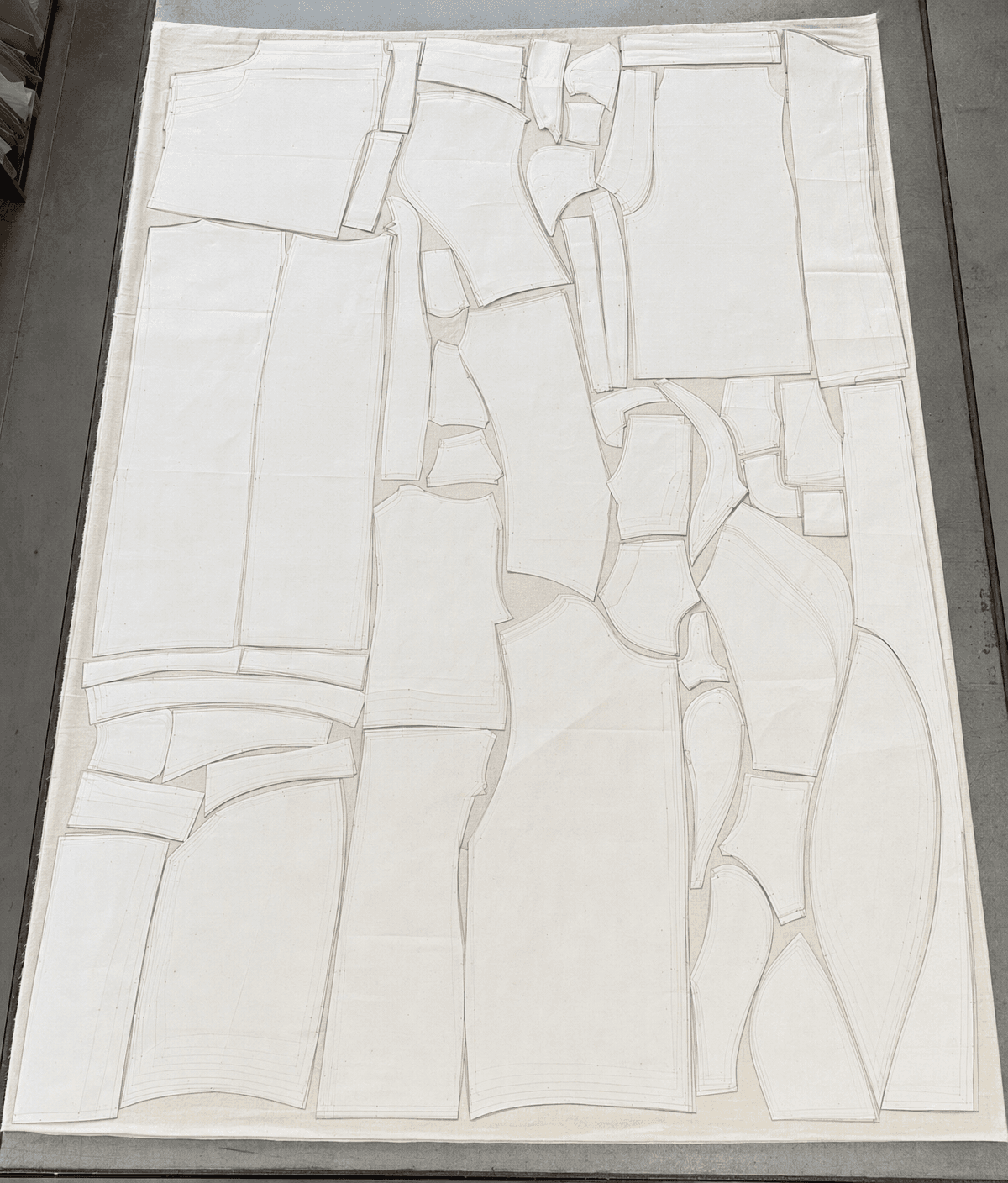
It goes the other direction too. Photograph a hand-drafted pattern and it runs through the same solver and the same checks as anything drawn here.
Launch pricing
Every other system in this category makes you request a quote. Here's ours. Training is included on every plan, including the free one — we don't sell courses. Prices in EUR, excluding VAT. Cancel any time.
| Feature | Open€0foreverAnyone with a pattern file. Factories, print shops, clients.Open a file | Studio€19per monthDesigners and small brands drafting their own.Get early access | RecommendedPattern Maker€49per monthFreelance and in-house pattern makers.Get early access | Production€119per seat / monthSmall manufacturers running production.Get early access |
|---|---|---|---|---|
| Open, view and print any pattern file | ||||
| Convert DXF / Gerber / Optitex / PDF / photo | ||||
| Seam, notch and grade-rule check | ||||
| Real-size PDF, A0 and tiled | ||||
| Receive share links | ||||
| Draft from measurements | — | |||
| Active styles | — | 5 | Unlimited | Unlimited |
| Grading — full size run, re-solved | — | Up to 6 sizes | Unlimited | Unlimited |
| Per-size tolerance check | — | — | ||
| DXF-AAMA · DXF-ASTM · single-size DXF | — | AAMA only | All | All |
| Excel measurement / spec report | — | — | ||
| Send share links to factories | — | |||
| Version history and pattern archive | — | 12 months | Unlimited | Unlimited |
| Markers, nesting and yield | — | — | — | |
| Shrinkage and fabric-width handling | — | — | — | |
| Cut files for every major cutter | — | — | — | |
| Team seats and shared block library | — | — | — | |
| Training, guides and support |
Not sure? Open, convert and check as many files as you like on the free plan. It doesn't expire and we don't ask for a card.
Free while you study, verified with a student email. Everything in Pattern Maker except markers.
Verify with a student emailFree site licence, unlimited students, no hardware requirement, curriculum materials included.
Talk to us about a site licencePay as you go across a full size run, all export formats, unlimited revisions for 90 days.
Get early accessFor reference, the published prices in this category:
Lectra, Optitex, Audaces, StyleCAD, Style3D do not publish a price.
Learn
Drafting fundamentals, grading rules, marker efficiency. Written by pattern makers. Open to everyone, customer or not. We don't sell courses.
What a grade rule is, why the shape has to re-solve, and where a size run breaks.
ReadIt has to work with everyone else
Imports
Exports
Export everything, any time, in open formats.
We don't train shared models on your work.
How a check becomes a labelQuestions
Draft your first piece for free.
Free forever for opening, converting and checking. No card.